Achieving high-quality provision in the baby room of English nurseries is a three-part project that aims to open up the conversation around high-quality provision for children 0-2 years old in England. The third and final strand for the baby room project was a series of vision-building workshops focused on imagining what provision for 0-2 year olds could look and feel like in an ideal world. We held five vision-building workshops between November 2025 and February 2026 with a total of 113 participants.
In this series of blog posts, we have explored each section of the vision-building workshops to share what participants want for their baby rooms. We started with our participants’ perspectives on an ideal baby room, and then thought about how the baby room links with the wider nursery. In this final blog post, we share how participants in the workshops envisioned the ideal baby room team.
The ideal baby room team
Quality baby rooms cannot exist without an amazing baby room team. In our main report, we found that high-quality provision in the baby room hinges on how teams work together. Baby room educators and nursery managers agreed that baby room teams needed to trust each other, create a sense of belonging, and have supportive systems in place. As one participant shared:
‘[I think part of quality is] if you’ve got a team that you can rely on. I think also that the dynamics of the team is an element of quality, isn’t it? How you understand one another. How you pick up where someone else leaves off… fitting everything in together as a puzzle piece.’
The workshops were a space to unpack the characteristics and dynamics of the ideal baby room team.
Every team member understands…
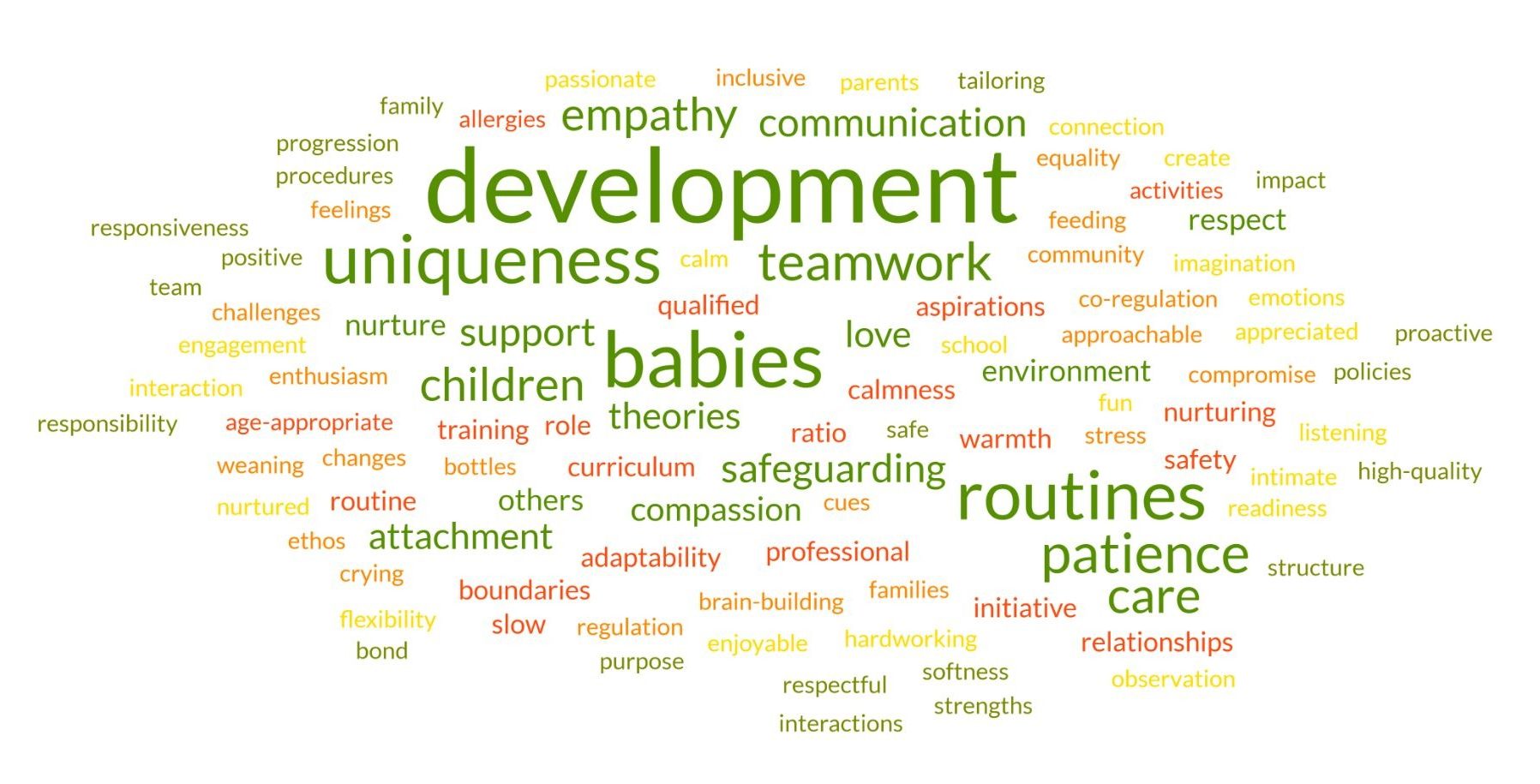
We started off the conversation by asking what every team member would understand in a perfect world (N=79). Above all, participants wanted baby room teams to understand child development in the 0-2 year age range. This was seen as the foundation for quality baby room provision, and resonates with the findings from our main report which highlighted a common concern that baby room educators often didn’t understand baby development at the level required.
Patience and teamwork also came out as important characteristics of baby room team members across the vision-building workshops, with team members describing it as:
‘Respecting each other’s feelings as real, as genuine, and supporting each other through whatever that day looks like for you as an individual.’
The support we want as a team
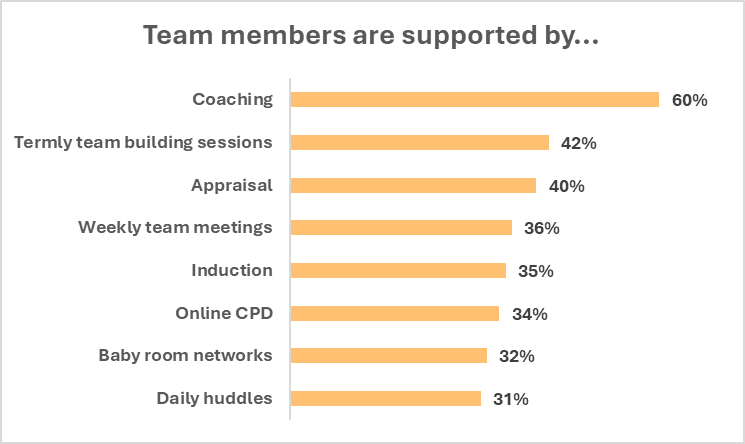
The responses from the workshop showed that baby room team members most often wanted coaching in order to support their practice (N=85). However, our research has demonstrated that coaching is one of the hardest types of CPD to access. This suggests a need to align CPD modes to what baby room educators feel that they most need and benefit from.
Team culture
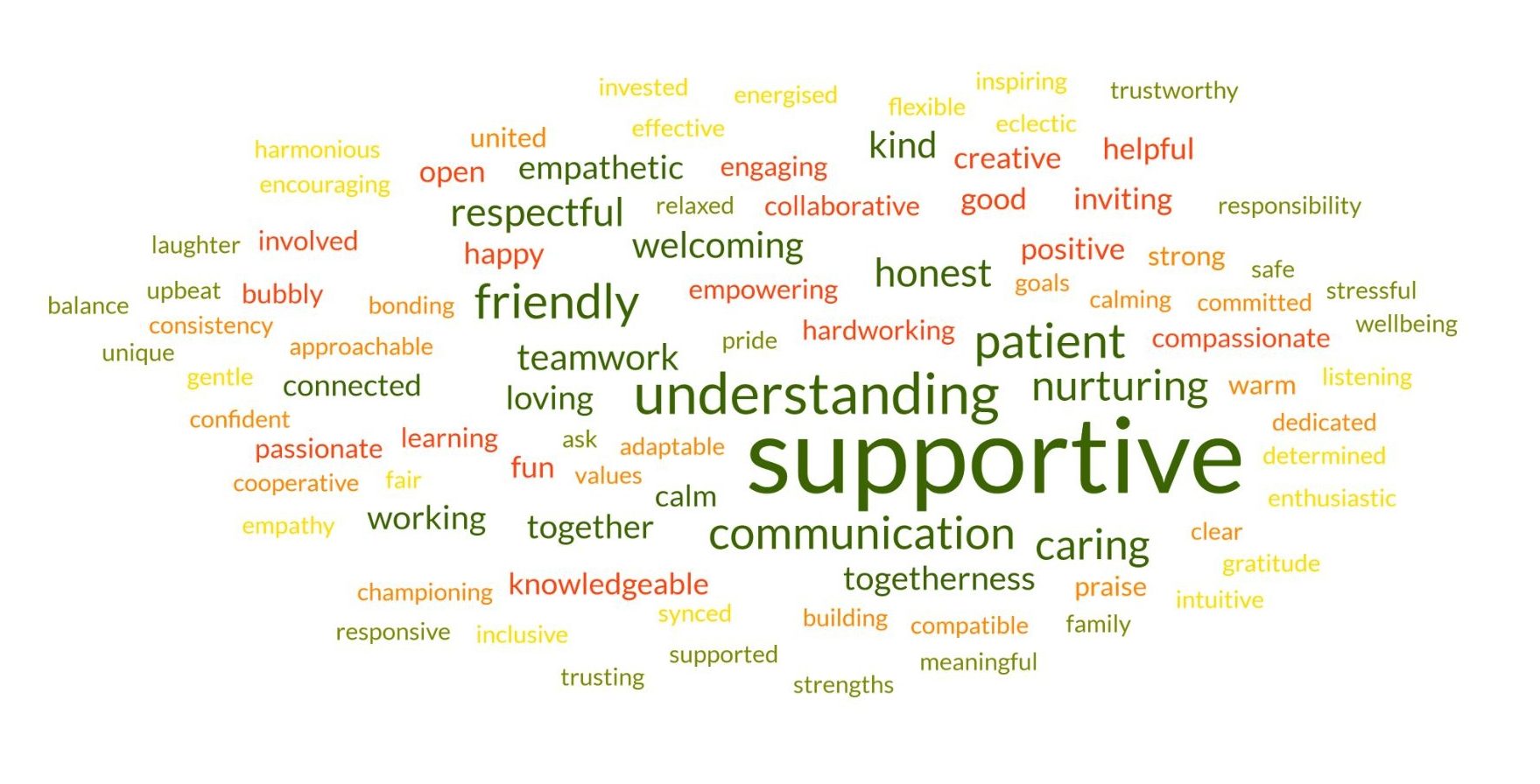
We ended each workshop by thinking about the ideal team culture. As shown in the figure above, participants emphasised the ‘supportive’ nature of the ideal baby room team (N=69). One participant described this as:
‘Knowing what each other’s strengths and weaknesses are and working as a collective to aid this.’
This was followed by several warm ideas such as being understanding and patient with one another. In baby rooms, educators are working tirelessly to hold the emotions of children and families, ensuring they receive the support they need. Educators want to offer this to each other as well. As one participant explained, it is essential to:
‘Listen to and value your team – they need to feel heard.’
A team culture rooted in support, understanding, and patience creates a strong foundation to navigate the hard days, ensuring team members feel supported and that they can show up to deliver quality provision in the baby room. This culture is built intentionally but lives in the little moments of the day – whether it’s checking in with each other, or stopping what you’re doing to instigate a spontaneous sing-song or dance party in the room.
We’d love to know:
- How does this vision of an ideal baby room team speak to your own ideals, and the current realities in your context?
- What in your current practice resonates with this vision, and what doesn’t?
- What would you add to the vision of an ideal baby room team that hasn’t been mentioned here?


Leave a Reply