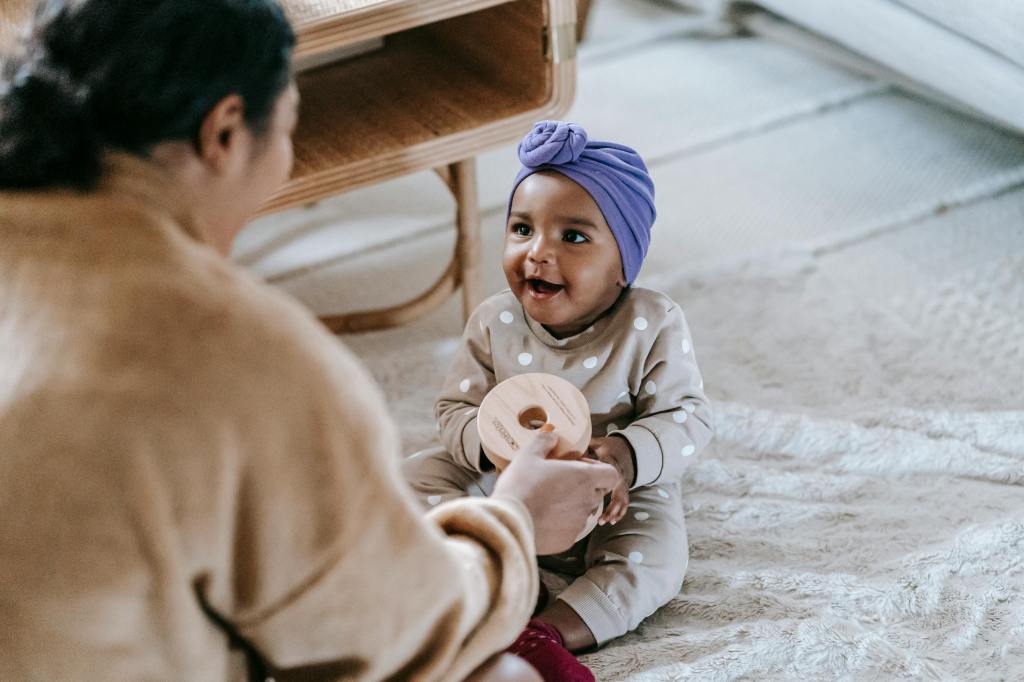
Since 2024, the baby room project has been focused on babies in the context of nurseries. But what about childminders? We are delighted to announce that the Nuffield Foundation has extended our project grant to explore what high-quality provision for babies looks and feels like among childminders in England, with the objective of extending the conversation around quality for children aged 0 to 2 years old to include childminding. In this blog post, we explain what is driving this project and what we plan to do.
Background
Childminders make up about 43% of providers in the sector (DfE, 2024), yet less than 12% of childcare spaces in England (Simon and Ang, 2025). In recent years, we’ve seen a significant decline in the number of childminders, with numbers decreasing by 50% from 56,200 in 2013 to 27,900 in 2023 (Ofsted, 2023). Professor Lynn Ang, Dr Antonia Simon, Dr Svetlana Speight, and Katie Hollingworth are leading a Nuffield Foundation research project that explores the benefits and challenges of working as a childminder, the impact of childminding, and the characteristics that make up high quality provision. Their findings are fundamental for understanding the state of childminding in England and its future. Our project feeds into this understanding but with a more specific focus on babies, in the context of the expansion of the entitlement, which parents can choose to use with nurseries or childminders.
In our research on the baby room to date, we have been repeatedly challenged in our conversations with LAs, baby room educators, and childminders themselves to expand the scope of our research and explore babies with childminders. Responding to this push from the sector, we are excited to turn our attention to understanding high-quality childminding provision for 0-2 year olds, and the barriers and supports in achieving this.
The plan
Rapid evidence review: We will conduct a rapid global evidence review of academic and grey literature from 2010 to present day to get to grips with the evidence surrounding quality provision in childminding for children aged 0-2 years old.
Surveys: Similarly to the baby room project, we will host a series of half-day CPD conferences for childminders. As part of this data collection, we will collect survey data from over 100 childminders across England to gather information about their provision for babies, including how often their provision involves babies, how many babies they accommodate, and the age at which they will take babies, alongside the professional learning they access.
Workshops: As part of the CPD half-day conferences, over 100 childminders will participate in workshops to build a vision of what quality baby provision means to them. We will focus on what quality provision for babies looks and feels like for childminders, the barriers and enablers to achieving this, the role of qualifications in their work, and their hopes for the future.
Our team is so eager to dive into this project and work with the sector to build more knowledge on quality provision for babies. Even though we’re not due to start this strand of the project until later in the year, we’re already starting to lay the groundwork for strong networks and good relationships – we know how essential these are for any research project. So if you are a childminder, a childminding advisor within an LA or stronger practice hub, or if you work with childminders in any other capacity, we would love to hear from you. Feel free to email Kayla Halls at k.halls@mdx.ac.uk.
 www.thebabyroom.blog
Leave a comment