Forest School for Life (FSFL) is a mixed age forest school located in Wymondham that welcomes children from six months old to school age, offering a provision rooted in a sense of belonging and commitment to nature. They currently welcome 6-8 babies under two years old per day. Our team had the joy of visiting their setting to spend a day with their babies in nature. In this blog post, we explore how FSFL’s provision for babies is underpinned by the themes of rhythm and attunement, community, and movement; we then draw out how they can be applied in a ‘traditional’ nursery context.
Rhythm and attunement
FSFL had a feeling of rhythm throughout their baby provision, where babies had a strong, internalized sense of their daily routine. The rhythm of the day was not heavily determined by clocks, but guided by children’s interests and needs. Babies were very much led by their own individual routines, and the educators honored and cherished each baby’s unique rhythms within the routine of the wider nursery.
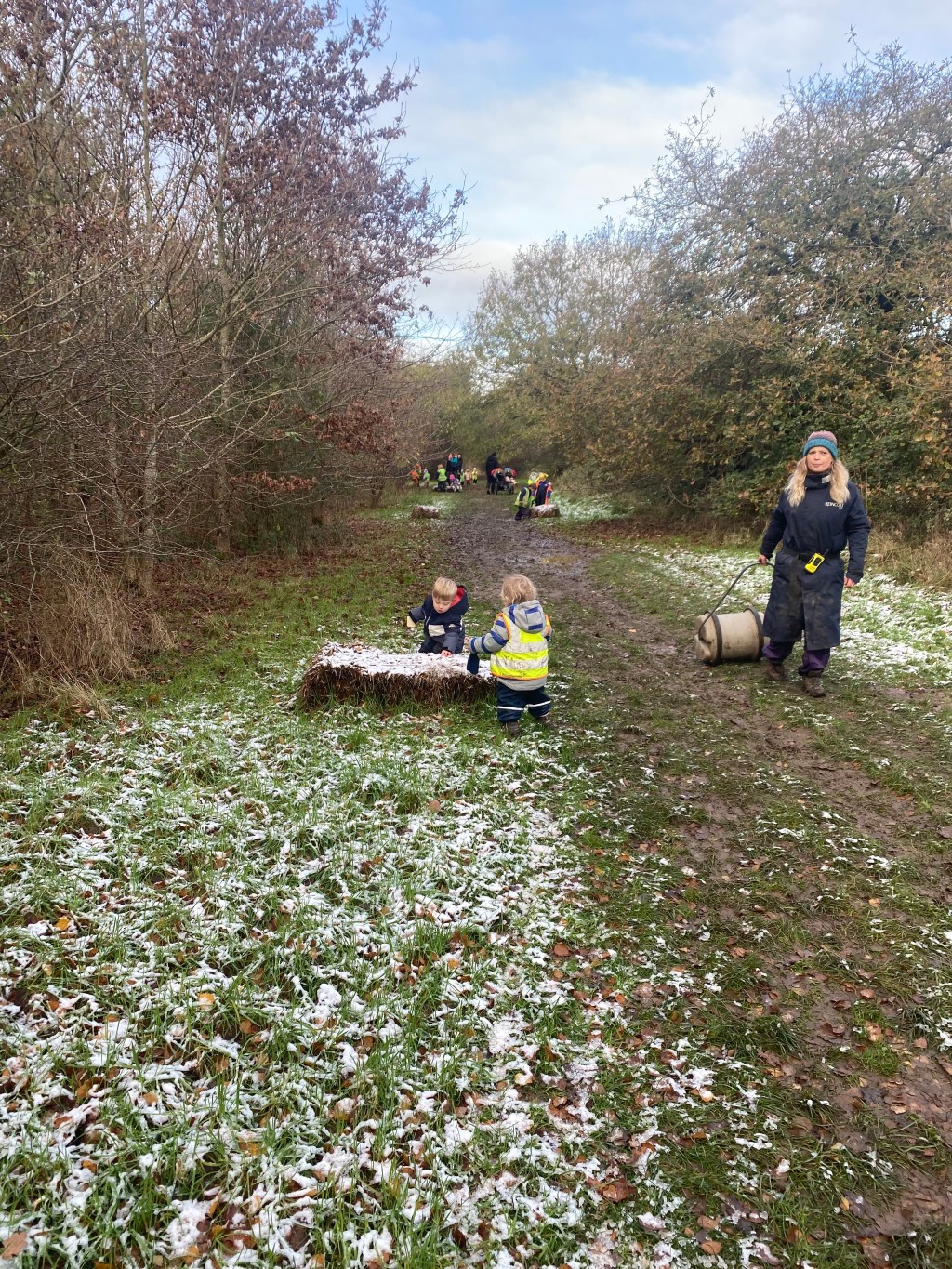
An example of this was during the walk from the Roost to the Den. Each day, all of the children start their morning at the Roost, which is a drop-off point near the front of the setting. Then, once the majority of the children have been dropped off, all the children walk the 1.2 kilometers from the Roost to the Den, which is the main activity area in the setting. The babies start their journey slightly before the older children, so they have ample time to move at their own pace and explore the wonders they see along the walk. The educators are deeply attuned to the babies on the walk, which moves at a leisurely pace, pausing to respond to their cues and interests along the path. All of the children at FSFL plod along as a whole towards the Den, and the educators are expertly in tune with the individual rhythms of each baby. It is a very slow-paced, self-determined walk from the Roost to the Den where each child’s interest are fully engaged with. This is a tricky balancing act that requires time, deep knowledge of the children, and an understanding that the nature walk varies each day. Below, I share some magical moments from the walk.
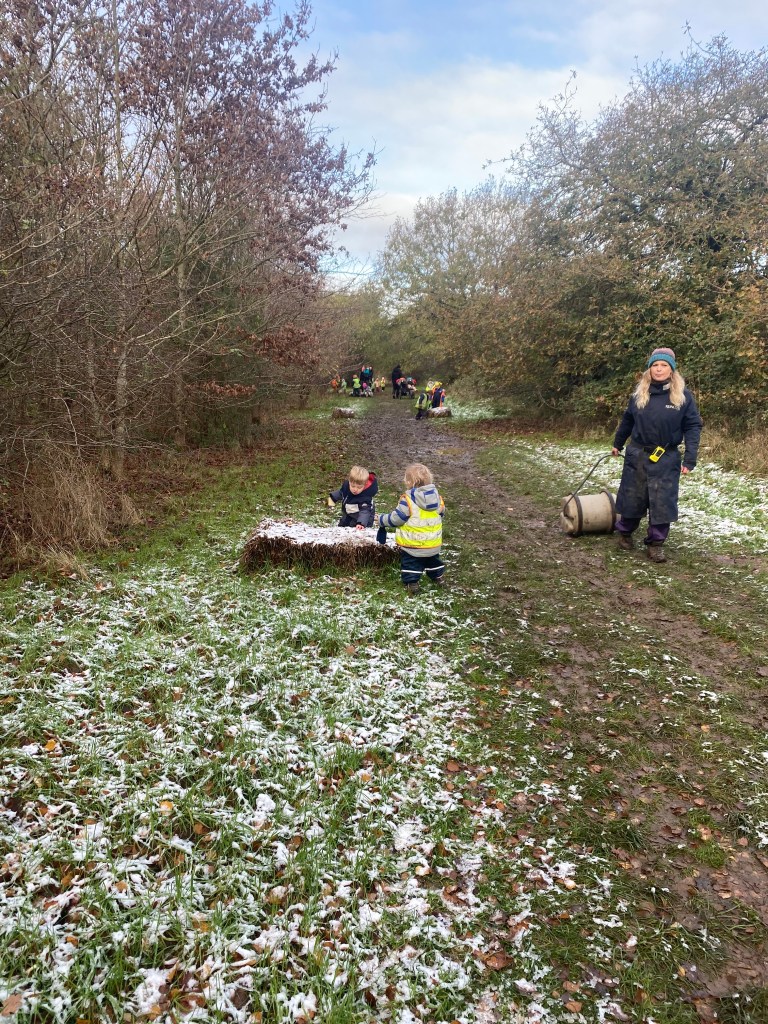
Two babies approach a hay bale, noticing the ice that covers it. They crouch in front of it before trying to step onto it. They crouch in front of it again and look back to an educator, saying “Mushroom!” The educator laughs and repeats “Mushroom!” She adds, “I’m not sure if there’s a mushroom in there.”
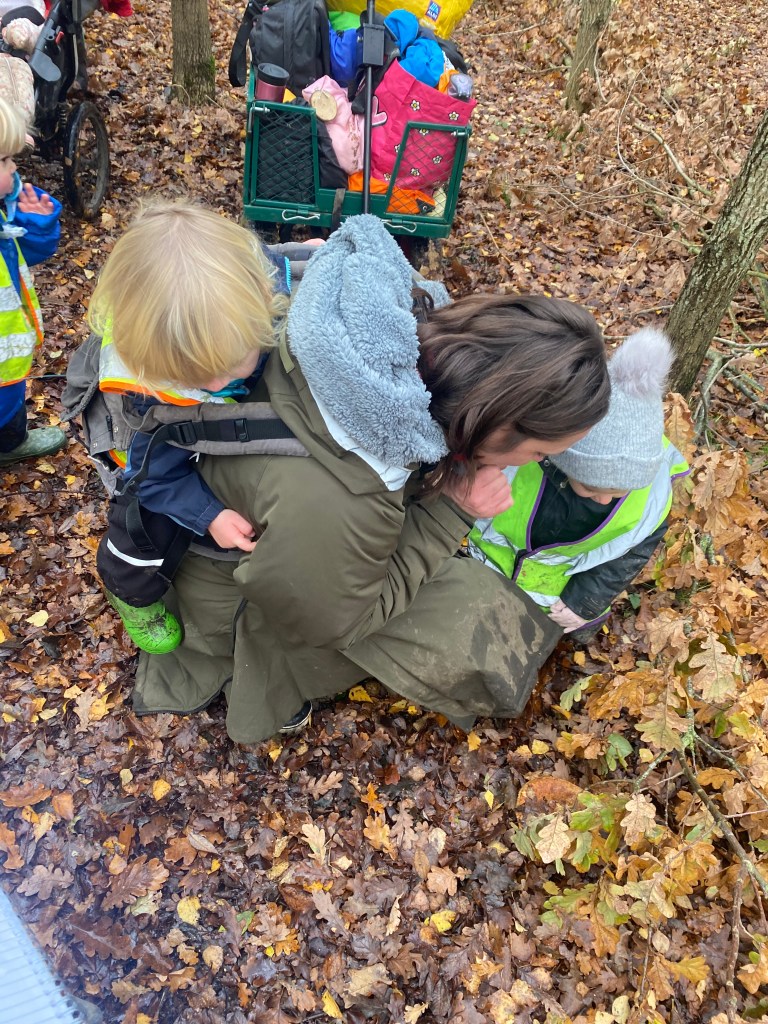
An educator notices a mushroom growing underneath a cluster of branches. The mushroom is covered in a thin layer of ice with a puddle in the middle. She stoops, crouching down and pointing it out to a few of the babies.
Community
In forest schools, the principle of community is foundational to each setting’s ethos (Forest School Association, n.d.). At FSFL, this means babies are completely integrated with older children throughout the course of the day, fostering unique opportunities for joyful connectedness. For example, when babies engaged with older toddlers, they scaffolded each other through play. The older toddlers had a firmer grasp on social norms, used more complex language, and engaged in a wider range of movements, all of which the babies observed and engaged with throughout the day. When it came to older children (preschool and school age), there was a feeling of siblinghood where cross-age social-emotional learning was at play. For example, one school aged child spent quality time with a baby just over 12 months old throughout the day, walking with her throughout the setting, chatting with her about their surroundings and what she may want to engage with.
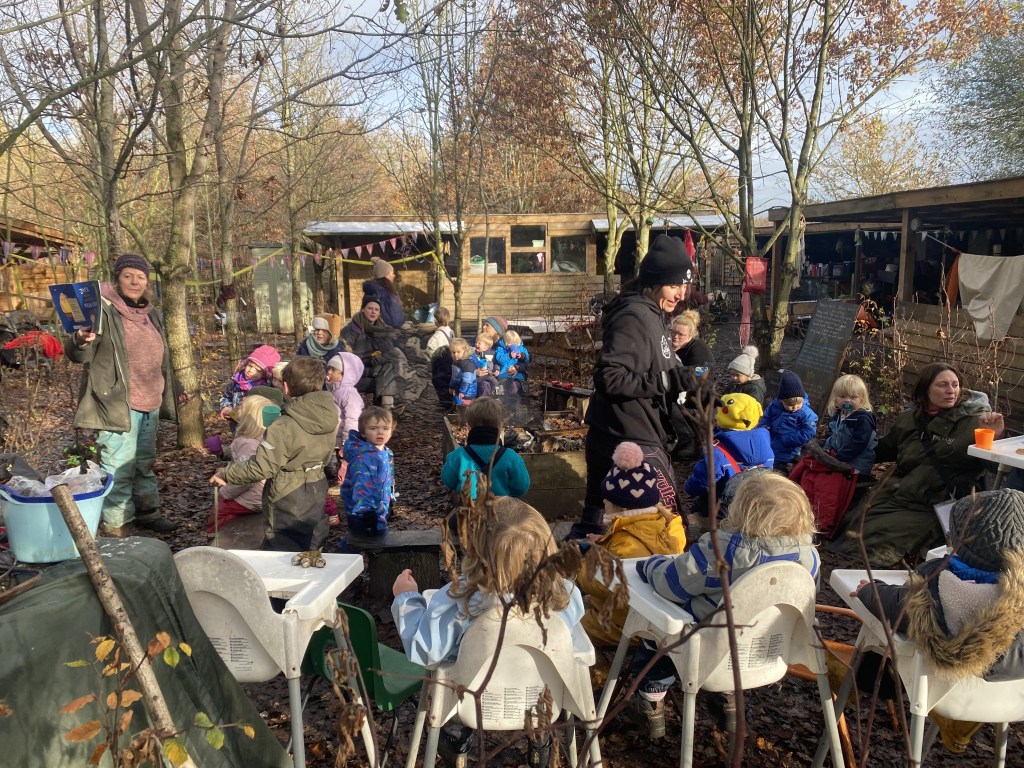
In this image, the babies enjoy circle time around the campfire with their key adults and the older children from the wider FSFL community. They are enjoying their breakfast together as they engage with a read aloud.
Movement
The baby provision at FSFL was largely characterised by movement. From the moment that children entered the setting, they were free to move as and when they please (within the limits of the area they were in). The Den has an area of 1,826.6 square meters, making it about 87 times the minimum amount of usable indoor space required for a traditional baby room of 6 babies (21 square meters). With this ample space available to them, I was surprised and delighted to see how much young babies move from place to place throughout the day, engaging with movement schemas or exploring the mud, trees, and leaves. Paired with the principle of attunement described above, educators were acutely aware of when the babies might need to be cuddled or pushed in the buggy for a bit, seeking comfort and closeness with a trusted adult, before going back out to explore their world. There was a sense of freedom where babies were given ample space to act self-determinedly, which is truly special for this age group.
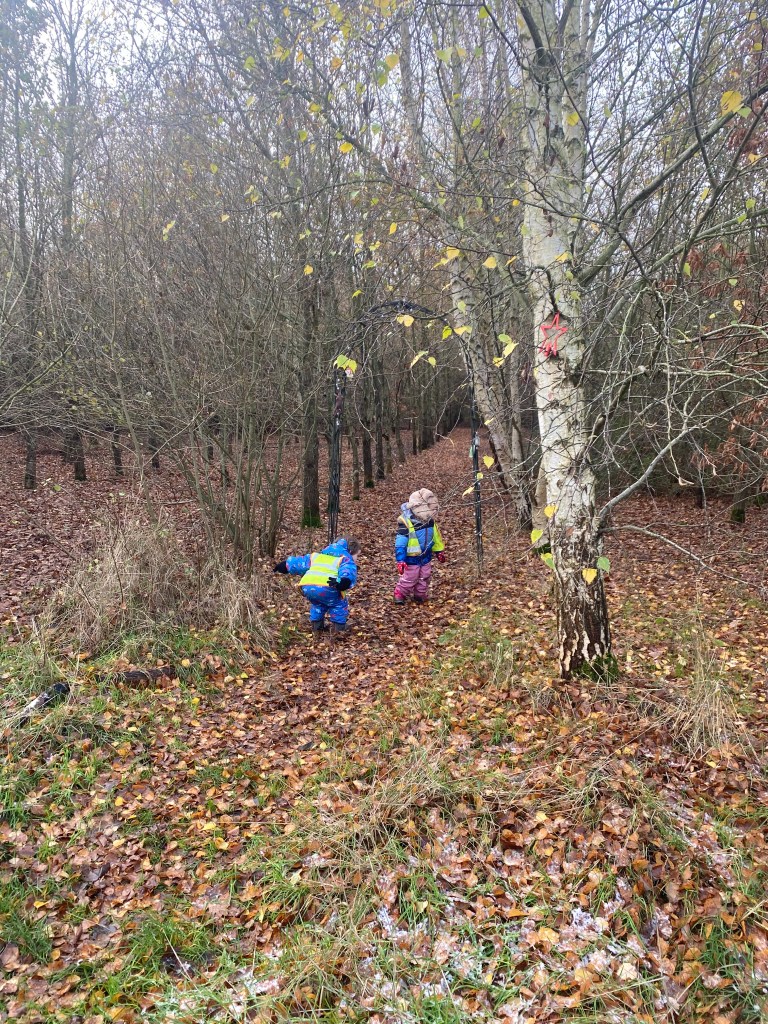
Two children engage in gross motor play on the walk from the Roost to the Den.
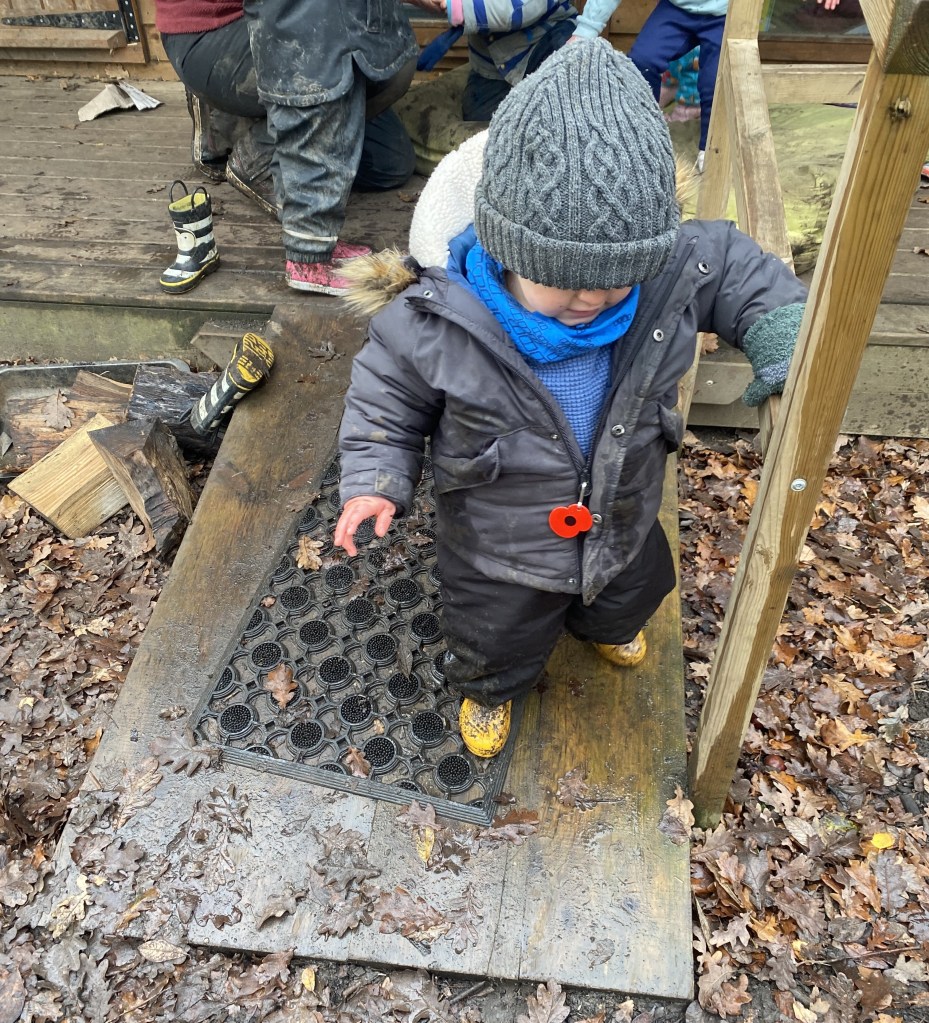
A child walks repeatedly up and down a wooden ramp, deep in a flow state with this movement schema.
FSFL’s baby provision is characterized by an atmosphere of rhythm and attunement, community, and movement. While the majority of settings in the early years sector do not have access to a forest school, there are plenty of ways to bring these principles to life in your settings. Below we share some reflection questions to consider how these principles can be applied in a non-forest school setting.
- Rhythm: How can you ensure babies have a strong, innate sense of what to expect throughout the day? Within this, how can you as an educator honour and cherish baby’s individual rhythms?
- Attunement: In your group-based activities throughout the week, step back and closely observe one child at a time. What do you notice? What cues are they offering you? What can you do to respond to their individual needs within the wider group?
- Community: Are babies part of the wider nursery community? Do older children have spaces to connect with babies, playing and learning alongside each other? Do the preschool and toddler educators in your setting have moments where they can connect with babies?
- Movement: How much space do babies have access to in your setting? If you have resource and capacity, try bringing babies to a space larger than they may normally experience – what do you notice? How do they move, and what could be done to encourage that movement on a more regular basis?


Leave a Reply